- Heavy nighttime movement above ceilings or inside walls
- Disturbed insulation, torn duct wrap, or compacted nesting areas
- Open soffit gaps, bent flashing, or damaged roof vents
- Strong odors near attic hatches, porches, or chimney lines
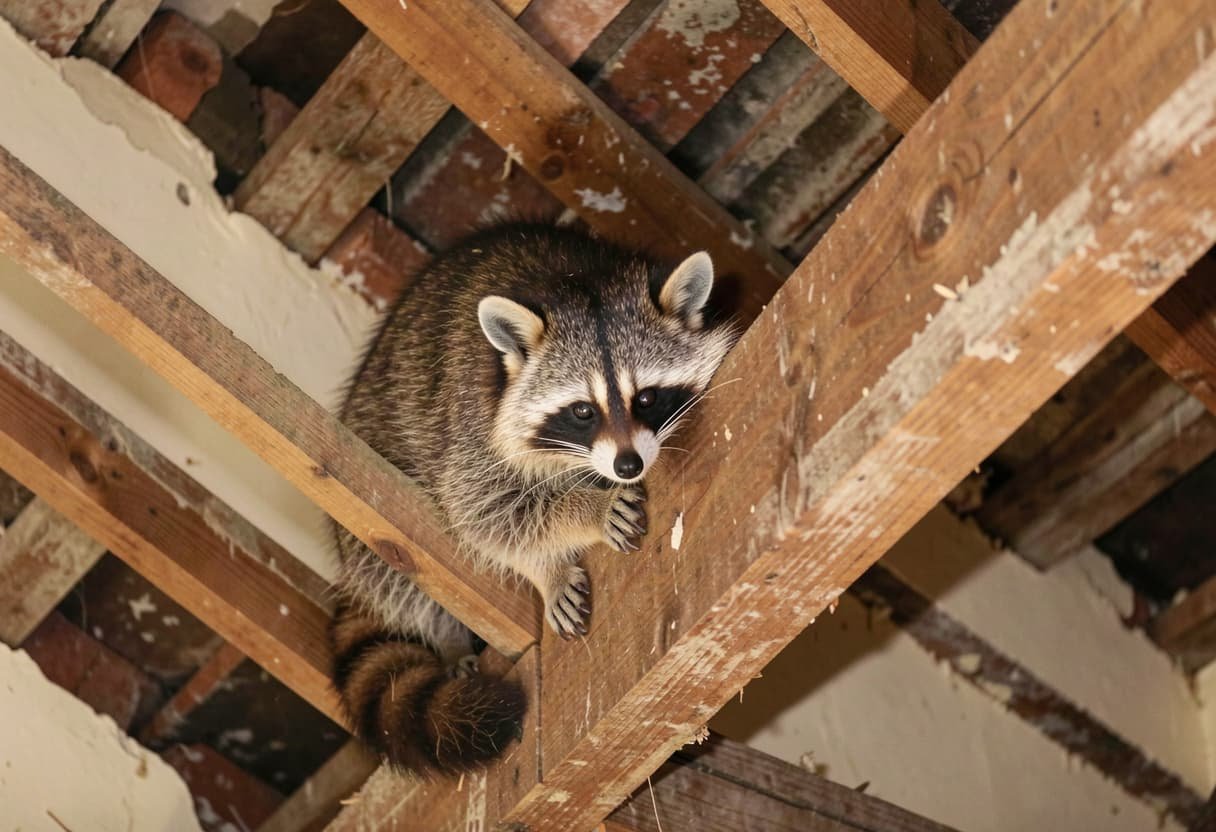
Attic & Roof Wildlife
Raccoon Removal
Raccoons often target attics, crawlspaces, chimneys, and detached garages when shelter, food access, or nesting space is available nearby.
Service Breakdown
A clearer view of the signs, risk spots, and next steps around the home.
Use this page to make sense of what you are seeing or hearing, where it may be starting, and which details usually matter after the animal is out.
What to look for
Raccoon problems usually start with heavy attic noise, torn soffits, and mess around rooflines or chimney areas.
- This page focuses on the signs and trouble spots homeowners usually notice first.
- Start with the part of the home where the activity keeps showing up.
- Use nearby animal pages too if the noise, odor, or damage still feels unclear.
- Attic contamination from waste and nesting debris
- Roofline damage around fascia, shingles, and vents
- Noise disruptions during nighttime activity
- Secondary entry pressure from repeat access attempts
- Property review focused on active entry points and attractants
- A safe plan for getting the animal out and dealing with the space it is using
- Effective exclusion methods for vents, gaps, and weak roof transitions
- Cleanup guidance and protection planning for future seasons
Common raccoon entry zones include roof returns, soffits, ridge vents, uncapped chimneys, and aging gable intersections.
Check roof transitions, vents, skirting, utility lines, detached structures, and other weak edges near the activity.
Secure trash storage, reinforced vent covers, capped chimneys, and trimmed tree access help limit repeat pressure around the structure.
- Control food and shelter attractants around the structure.
- Recheck vulnerable gaps, trim joints, vents, and low clearance edges.
- Pair removal with exclusion work for stronger long-term protection.
Need help choosing?
Secure your home today.
Share where the activity is happening, what you hear or smell, and the best callback details for a clearer next step.